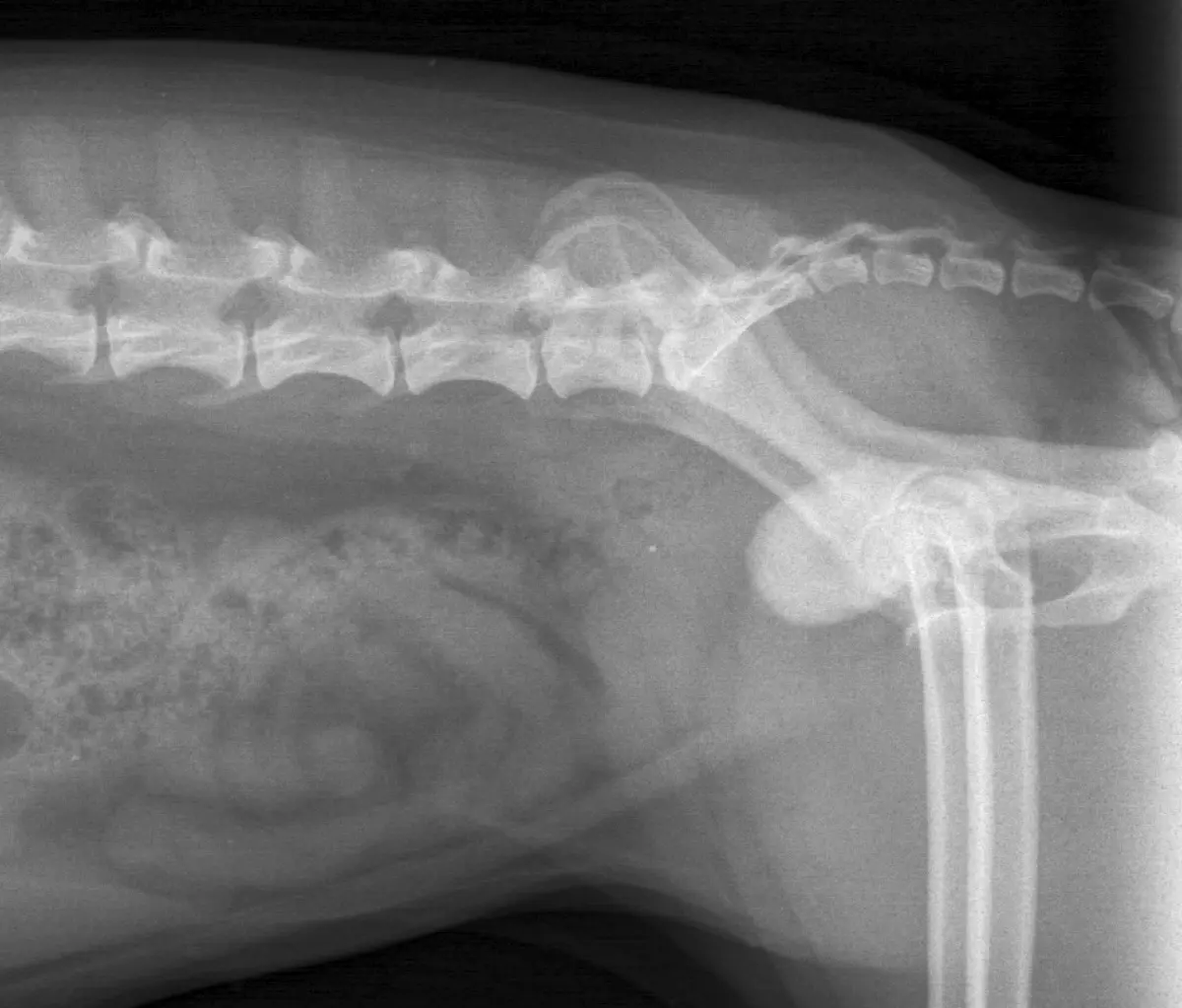
If your dog's X-ray or ultrasound report mentions "bladder stones", "uroliths", or "cystic calculi", it is natural to feel worried, especially if your dog has been straining or passing bloody urine. Here is the reassuring truth: bladder stones are one of the most common problems vets find in the canine urinary tract, they are very treatable, and the large majority of dogs make a full recovery once the stones are dealt with. This guide explains what the finding means on imaging, why stones form, the one situation that is a genuine emergency, and how they are treated and prevented.
What bladder stones are
Bladder stones, known medically as uroliths or cystic calculi, are hard mineral formations that build up inside the urinary bladder. They begin as microscopic crystals that clump together over weeks to months when the urine is overly saturated with certain minerals. Some dogs have a single stone, while others have dozens, ranging from sand-like grit to stones several centimeters across.
How a stone appears on imaging depends on what it is made of, which is why vets often combine tests.
- On X-ray, dense (radiopaque) stones such as struvite and calcium oxalate stand out clearly as bright shapes inside the bladder
- On ultrasound, even stones that stay invisible on X-ray show up, each casting a tell-tale shadow behind it
- Ultrasound also shows how many stones there are, how big they are, and whether the bladder wall looks thickened or inflamed
Because different stone types behave so differently, the picture on the scan is only part of the story, much as it is with other imaging findings such as hip dysplasia. The same abdominal ultrasound your vet runs for the bladder can also check nearby organs, the way it does when looking for a splenic mass. The stones almost always need to be read alongside a urine test and your dog's symptoms.
Common types and what causes them
Stones form when urine becomes concentrated enough for minerals to crystallize and stick together. Several factors push that process along: urine pH, infection, breed, diet, and how much a dog drinks. The two most common types account for the large majority of cases.
- Struvite — often linked to a urinary tract infection, since certain bacteria change the urine chemistry. These are the stones most likely to be dissolvable with diet
- Calcium oxalate — driven more by mineral balance than infection, and common in some small breeds such as Miniature Schnauzers, Bichon Frises, and Shih Tzus. These cannot be dissolved and must be removed
- Urate — seen in Dalmatians and in dogs with a liver shunt, and often invisible on plain X-ray
- Cystine — less common and tied to an inherited kidney trait
Knowing the type matters because it decides whether the answer is a diet, a procedure, or surgery, and how to stop the next stone from forming.
The one situation that is an emergency
Most bladder stones are not urgent, and there is often time to plan treatment calmly. The important exception is a urinary blockage. If a stone lodges in the urethra, the narrow tube that carries urine out of the body, your dog may be unable to pass urine at all. Pressure then backs up toward the kidneys, and within a day or two this becomes life-threatening.
This is far more common in male dogs, whose urethra is longer and narrower. Signs that need an immediate vet visit include repeated straining with little or no urine coming out, crying in the litter of attempts, a tense or painful belly, restlessness, or vomiting. When in doubt, treat an inability to urinate as an emergency and call your vet right away.
Signs owners usually notice
When stones do cause symptoms, they tend to look like a stubborn urinary problem that will not settle.
- Straining to urinate, or spending a long time in position
- Passing urine more often but only in small amounts
- Blood-tinged or cloudy urine
- Accidents indoors from a previously house-trained dog
- Licking at the genitals, or general discomfort and low mood
Many dogs with small or few stones show nothing at all, and the stones turn up by chance on a scan done for another reason. Because these signs overlap with simple infections and other bladder conditions, they are a reason to see your vet rather than a diagnosis on their own.
How treatment works
The right treatment follows the stone type, the size and number of stones, and whether there is a blockage. Your vet will usually choose from a short menu of well-established options.
- Dietary dissolution — for struvite stones, a therapeutic diet that changes urine chemistry can shrink and dissolve them over several weeks, alongside treating any infection. It avoids surgery, but only works for the right stone type
- Surgery (cystotomy) — the most direct fix, especially for calcium oxalate stones, large stones, or a blockage. The bladder is opened and the stones removed, and most dogs recover quickly
- Minimally invasive removal — techniques such as voiding urohydropropulsion for tiny stones, or laser lithotripsy at referral centers, can clear stones without traditional open surgery in selected cases
- Emergency decompression — a blocked dog needs the obstruction relieved urgently before any longer-term plan
After treatment, prevention becomes the focus: the retrieved stone is analyzed, and your vet may recommend a specific diet, more water intake through wet food or fountains, and periodic urine checks to catch a returning problem early.
Why a second read can help
Deciding between dissolving a stone and operating rests on reading the imaging correctly, judging the likely stone type, and not missing a small stone hiding behind a larger one. Before committing to surgery, many owners find it reassuring to have another specialist look at the radiographs and ultrasound. DocOrbit offers a veterinary second opinion on your animal's imaging that you can share with your own vet, so the plan rests on more than one expert's read. It is about making a clear decision with as much information as possible, especially when surgery is on the table.
Are bladder stones in dogs an emergency?
Usually not, but there is one exception that is a true emergency. If a stone blocks the urethra so your dog cannot pass urine, pressure backs up toward the kidneys and the situation becomes life-threatening within a day or two. This is far more common in male dogs, whose urethra is longer and narrower. A dog that is straining hard and producing little or no urine, crying, or vomiting needs to be seen immediately.
Can dog bladder stones dissolve without surgery?
Some can. Struvite stones, which are often linked to urinary infection, can frequently be dissolved over several weeks with a special therapeutic diet and treatment of the infection. Other common stones, especially calcium oxalate, cannot be dissolved and have to be removed. That is why identifying the stone type, through imaging, urine testing, and analysis of any stone that is retrieved, guides the whole plan.
What are the signs of bladder stones in dogs?
The most common signs are straining to urinate, passing urine more often but in small amounts, blood in the urine, and accidents in a previously house-trained dog. Some dogs lick at their genitals or seem uncomfortable. Many dogs with small or few stones show no signs at all, and the stones are found by chance on a scan done for another reason.
What causes bladder stones in dogs?
Stones form when the urine becomes overly concentrated with certain minerals, which then crystallize and clump together. Urine pH, urinary tract infections, breed and genetics, diet, and how much a dog drinks all play a role. Struvite stones are often tied to infection, while calcium oxalate stones are more about mineral balance and are common in certain small breeds.
How are bladder stones in dogs diagnosed?
Vets use imaging plus urine testing. Dense stones show up clearly on X-ray, while stones that are invisible on X-ray are picked up on ultrasound, which also shows their number and size. A urinalysis looks for crystals, blood, and signs of infection, and analyzing a stone once it is removed confirms its exact type so prevention can be tailored.
Key takeaways
- Bladder stones are common in dogs and, in most cases, very treatable with a full recovery
- A male dog straining but unable to pass urine is a genuine emergency, treat it as one
- X-ray and ultrasound are used together because different stone types show up differently
- Struvite stones can often be dissolved with diet, while calcium oxalate stones need removal
- Analyzing the stone and adjusting diet and water intake helps prevent the next one
This article is for general information only and is not veterinary advice. Always discuss your animal's imaging results and next steps with a qualified veterinarian.