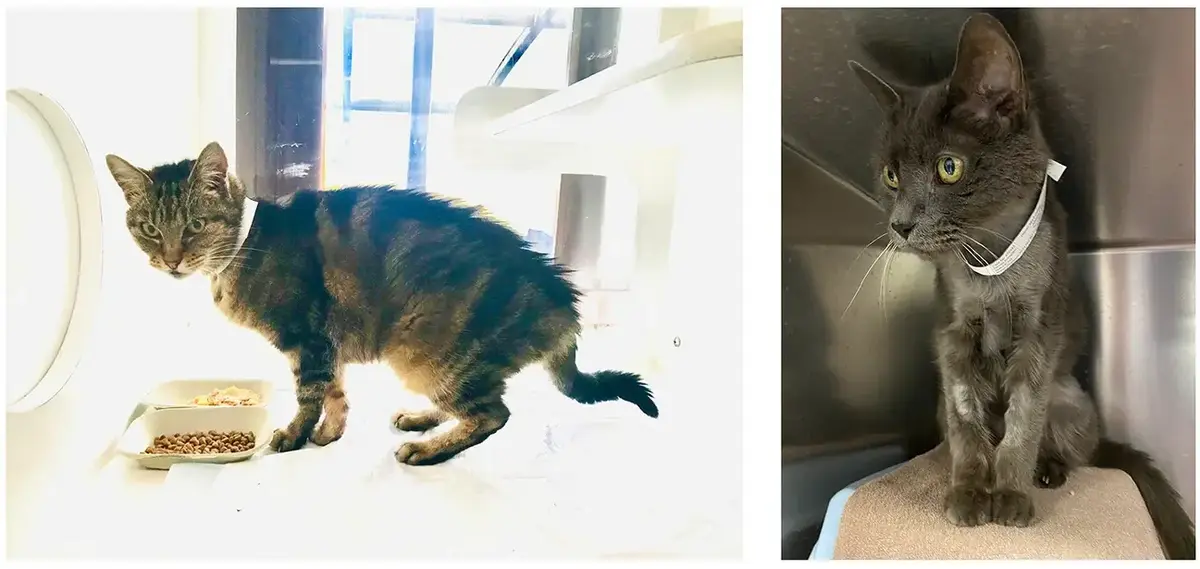
If your senior cat has been losing weight despite a hearty appetite, seems more restless than usual, or your vet has just used the words "fast heart rate" and "hyperthyroidism" in the same sentence, here is the reassuring truth: feline hyperthyroidism is one of the most common hormone problems in older cats, and also one of the most treatable. This article covers what the disease actually is, why it makes the heart race, when it needs prompt attention, how it is diagnosed, and the main paths to treating it.
What is feline hyperthyroidism?
The thyroid gland is a small, paired gland in the neck that produces a hormone called thyroxine, or T4, which sets the pace for the whole body's metabolism. In hyperthyroidism, one or both thyroid lobes develop a growth that pumps out far more T4 than the body needs, and every system that hormone touches, the heart, the gut, the kidneys, the nervous system, runs faster than it should. It is overwhelmingly a disease of older cats, typically appearing from around 10 years of age onward, and is rare before that.
- Caused almost always by a benign, non-cancerous enlargement of one or both thyroid lobes
- A true thyroid cancer accounts for only a small fraction of cases
- Can affect one lobe or both, which matters for some treatment choices
- Rare in cats younger than about 8 years old
What causes it?
The exact trigger for the thyroid growth is not fully understood, and it is not something an owner did or did not do. Researchers have looked at a number of environmental factors that might play a role, including certain flame-retardant chemicals found in household dust and some types of canned cat food, but none has been proven to directly cause the disease, and age itself remains the strongest known risk factor. Some studies suggest Siamese and Himalayan cats may be at slightly lower risk than other cats, though hyperthyroidism can affect any cat.
Symptoms: weight loss, a big appetite, and a racing heart
The signature combination is weight loss in a cat that is eating the same amount as before, or even more, sometimes ravenously.
- Weight loss despite a normal or increased appetite
- A fast heart rate, sometimes felt as a strong, rapid pulse through the chest wall
- Increased thirst and urination
- Restlessness, increased activity, or a cat that seems unable to settle
- A greasy, unkempt, or matted coat
- Vomiting or looser stools
- Occasionally a small, firm lump felt low in the neck, over the thyroid gland
Not every hyperthyroid cat shows every sign, and in a mild or early case, weight loss may be the only clue an owner notices before a routine senior blood panel picks up the rest.
Is it serious? When to see a vet promptly
Hyperthyroidism itself usually develops gradually over months and is rarely a same-day emergency on its own, but two of its knock-on effects are worth knowing. High blood pressure is common in hyperthyroid cats, and if it is severe it can cause sudden blindness from a detached retina, so a cat that suddenly seems to be bumping into furniture or has very wide, unresponsive pupils needs to be seen right away. The heart can also be pushed into failure, and fast or labored breathing at rest, sometimes with open-mouth breathing, is an emergency and needs same-day veterinary care rather than a routine appointment.
How feline hyperthyroidism is diagnosed
A blood test measuring total T4 is the main screening test, and it is usually enough on its own; if the result sits in a grey zone, a free T4 test or a repeat sample a few weeks later can clarify things. Your vet will also feel the neck for an enlarged thyroid lobe and listen closely to the heart for rate, rhythm, and any murmur, and will typically check blood pressure, since hypertension is so common alongside this disease.
A full kidney panel and urine test are also routine, because hyperthyroidism raises blood flow through the kidneys and can make kidney function look better on paper than it really is; treatment is often introduced gradually so hidden chronic kidney disease in cats does not go unnoticed once the thyroid level comes down. Imaging plays a supporting role rather than the leading one: a nuclear medicine thyroid scan, called scintigraphy, is mainly used before radioactive iodine treatment or when thyroid tissue is suspected in an unusual spot such as the chest, and an echocardiogram may be recommended if the heart rate stays fast or a murmur is heard, both to check for thyrotoxic heart changes and to rule out a look-alike condition such as hypertrophic cardiomyopathy in cats.
Treatment options
There are four main paths, and none of them is automatically the right one for every cat, much as the treatment plan for another hormonal disease, Cushing's disease in dogs, is chosen case by case rather than off a single formula.
- Methimazole — a tablet, liquid, or transdermal gel taken twice daily for life. It controls hormone levels well and is fully reversible, but needs periodic bloodwork to keep the dose right and can occasionally cause vomiting, appetite loss, or other side effects.
- Iodine-restricted prescription diet — thyroid hormone production needs iodine, so limiting it lowers T4. It only works if the cat eats nothing else at all, which is difficult in a multi-cat household or for a cat that hunts or scavenges.
- Surgical thyroidectomy — removal of the affected lobe or lobes, which can be curative. It requires a general anesthetic, a bigger consideration in an older cat with heart changes, and careful technique to protect the nearby parathyroid glands that control calcium.
- Radioactive iodine therapy (I-131) — widely considered the gold standard, since it destroys the overactive tissue while sparing normal thyroid and the parathyroids. A single treatment cures the large majority of cats, but it requires a stay of several days at a licensed facility afterward while the radioactivity clears.
The right choice depends on your cat's age, kidney function, other health conditions, and practical factors like whether twice-daily medicating for years is realistic for your household.
Living with a hyperthyroid cat
Whichever path you take, ongoing monitoring is part of the plan: periodic bloodwork to track T4 and kidney values, regular weight checks at home, and, if any heart changes were found, learning to count your cat's breathing rate while asleep as an early warning sign of trouble. If your cat is on the iodine-restricted diet, keeping other food and treats out of reach matters more than it does with any other option, especially in a multi-cat home.
Why a second read can help
Feline hyperthyroidism generates a fair amount of imaging along the way, and some of it is genuinely hard to read, such as a borderline thyroid scan or an echocardiogram showing early thyrotoxic heart changes that can be difficult to tell apart from true hypertrophic cardiomyopathy. If a finding like that leaves you uncertain, you can ask a veterinary radiologist to review your cat's scan online rather than waiting for a specialist referral. DocOrbit offers a veterinary second opinion on your cat's images that you can share with your own vet, delivered as a written report rather than a verbal impression. It does not replace your treating vet, but an online veterinary radiology second opinion can add real confidence when a scan sits in a grey zone.
Is feline hyperthyroidism curable?
Yes, for many cats. Radioactive iodine therapy destroys the overactive thyroid tissue in a single treatment and cures the large majority of cats, and surgical removal of the affected lobe or lobes can also be curative. Medication and the iodine-restricted diet do not cure the disease; they control the hormone level only for as long as they are used. Which option fits a particular cat depends on age, kidney function, and other health problems, which is why the choice is made together with a vet.
Why does hyperthyroidism make a cat's heart race?
Thyroid hormone acts directly on the heart muscle, increasing both the heart rate and the force of each beat. In a hyperthyroid cat this often produces a persistently fast heart rate and can thicken the heart wall over time, a pattern called thyrotoxic heart disease that can look similar to hypertrophic cardiomyopathy on an echocardiogram. The reassuring part is that this heart change usually improves, and often resolves completely, once the thyroid hormone level is brought back to normal.
Can hyperthyroidism hide kidney disease in an older cat?
Yes, and this is one of the main reasons treatment is introduced carefully rather than all at once. Excess thyroid hormone increases blood flow through the kidneys, which can make kidney function look better on bloodwork than it really is. Vets typically start with medication or a short reversible trial and recheck kidney values afterward, because chronic kidney disease that was hidden beforehand can become apparent once the thyroid level comes down.
What is the outlook for a cat with hyperthyroidism?
Excellent for most cats when the disease is caught and treated appropriately. Cats treated with radioactive iodine or surgery often go on to live a normal lifespan for their age, and cats managed with medication or diet alone typically do well for years with routine monitoring. The outlook is more guarded for cats that already have advanced heart disease or significant kidney disease at diagnosis, which is why your own cat's bloodwork and imaging findings matter more than the diagnosis label by itself.
Key takeaways
- Feline hyperthyroidism is one of the most common, and most treatable, hormone diseases in older cats
- Weight loss alongside a normal or bigger appetite, a fast heart rate, and restlessness are the classic combination of signs
- A blood test measuring thyroid hormone (T4) is the main way it is diagnosed, alongside a physical exam and a blood pressure check
- Four main treatment paths exist, medication, diet, surgery, and radioactive iodine, each trading convenience against being curative
- Kidney function is checked before and during treatment because hyperthyroidism can temporarily hide underlying kidney disease
Can I get a second opinion on my pet's scan online?
Yes. An online veterinary radiology second opinion runs entirely from home: you upload your cat's images, with no CD to post and no extra trip to a specialist center, and a subspecialist veterinary radiologist re-reads the study, whether that is an echocardiogram, a thyroid scan, or an abdominal ultrasound, and writes a structured report you can share with your own vet. DocOrbit returns that signed second read in 24 to 48 hours, and afterward you can message the veterinary radiologist with questions about what the images actually show for your cat.
This article is for general information only and is not veterinary advice. Always discuss your animal's imaging results and next steps with a qualified veterinarian.